Marketplace Cross-Border Software
Let your sellers in Turkey offer products worldwide. Multi-language support, automatic translation, international shipping integrations, and exchange rates help you enter global markets.
On this page
What is the marketplace cross-border business model?
The marketplace cross-border model lets products uploaded by sellers and the marketplace owner be sold abroad. To design this model, you need to plan the topics below.
1 How should you choose the foreign language?
When designing a marketplace cross-border model, one of the first decisions is how the foreign language will be used. One of the following options can be chosen depending on the project;
1- Translate the storefront into the target country language and upload products in that language
Product names and descriptions can be entered manually when the catalogue is small. For large volumes, sellers can translate Excel files using the “Documents” feature on Google Translate.
After translating Excel via Documents, sellers upload products to the site. For XML feeds, the file can first be converted to Excel with our built-in converter, translated in Google Documents, then imported.
If you have a single target country, the default site language is set to that language. If you operate in several countries with different languages, the visitor’s IP can be detected so the storefront opens in the language used in that country.
Using both a translated storefront and products entered in the target language is not easy when you have many products and frequent updates. High-volume sites usually prefer the approach below.
2- Translate the storefront into the target language and use Google Translate on the fly for parts of the catalogue
The storefront is translated into the export market language, but products are uploaded in Turkish. When visitors arrive, the template is shown in the translated language while product names and categories are translated in real time with Google Translate.
3- Translate the entire site into the target language with Google Translate
The storefront stays in Turkish and products are uploaded in Turkish. Visitors switch language using flags in the header; all languages supported by Google can be used. Optionally, IP detection can open the site automatically in the visitor’s language.
2 How do customers react to automatic translation mistakes?
When only the storefront is professionally translated, machine translation usually covers a narrow slice—product name, description, attributes—so shoppers often do not even notice.
Even AliExpress, part of a group with tens of billions in revenue, contains thousands of translation issues. Given their volumes, it is fair to say buyers largely ignore minor translation errors when purchasing.
AliExpress also auto-translates its template, so errors appear even on the homepage. We therefore recommend translating the storefront from a proper source language and letting Google Translate handle product names, descriptions, attributes, and options as the most practical setup.
3 How do shipping and invoicing work in a marketplace cross-border model?
You can use one or more of the following delivery models at the same time.
1- Ship each order individually
A visitor from abroad buys from one or more sellers. Each seller prepares the items and hands them to the marketplace’s contracted carrier.
The consignee is the buyer; the shipper is the seller who listed the product. International shipping integrations use different APIs than domestic Turkish carriers.
Besides APIs, bills of lading and proforma invoices are required, so integration timelines are longer than for domestic shipping.
2- Consolidate at the marketplace owner’s warehouse and export in bulk
Sellers send prepared orders to the owner’s domestic warehouse via a domestic carrier. The owner consolidates and exports in bulk.
In this model the marketplace issues the final B2C invoice to the buyer, so funds must flow to the marketplace. For example, on a USD 100 sale the owner might pay the seller USD 85; the seller issues an export-registered invoice to the owner for USD 85.
With this export flow, e-invoice integration (e.g. Paraşüt) runs in B2C mode: the marketplace is always the issuer and the buyer is the customer on every invoice.
4 Which currency should you collect in?
Products are entered in the site’s base currency; the visitor’s IP can switch display prices to the currency commonly used in that country.
Target countries should be defined during discovery so engineering can configure behaviour accordingly. Shipping fees are also stored in the base currency and converted at checkout and in the cart.
About payment-provider fees
Many Turkish PSPs (iyzico, PayTR, etc.) settle cross-border card traffic mainly in USD and EUR. If you charge in those currencies, they often add roughly 2.5% on top of standard acquiring fees for FX and transfer costs.
We usually show prices in the buyer’s local currency but convert the amount to TRY at Central Bank rates at payment so you avoid the extra FX markup on foreign-currency settlements.
For example, shoppers may see RUB, AZN, USD, etc., while the PSP charges TRY at checkout—avoiding the ~2.5% surcharge tied to foreign-currency collection.
5 Calculating customs duties in a marketplace cross-border model
Some sites estimate duties from the destination country’s rates, collect them at checkout, and handle customs themselves.
Others leave customs to the buyer if goods are held. Buyers may abandon the shipment or pay duties to release it.
If you want duties calculated and collected during purchase, the platform needs per-destination customs logic as an additional feature.
6 What are more complex marketplace cross-border setups?
The first four sections assume all sellers are in Turkey and buyers are international. Here we outline more advanced combinations.
1- Selling both abroad and inside Turkey
This stacks a domestic Turkish marketplace with a cross-border export channel.
- You typically integrate two carriers—one for Turkey, one for international—and maintain both APIs.
- Decide whether sellers ship direct overseas or goods are consolidated at your Turkish hub before bulk export.
- Clarify invoicing and payout flows (pure B2C vs marketplace commission model).
2- Sellers in Turkey and abroad at the same time
This pattern combines three layers:
- a) Domestic marketplace inside Turkey
- b) Cross-border marketplace export
- c) One or more overseas “local marketplace” regions running in parallel
This is the hardest orchestration; as you add overseas local marketplaces, the architecture converges toward an AliExpress-style global network.
Important
Turkish payment providers generally only pay out to sellers based in Turkey. If Azerbaijani sellers list products for buyers in Azerbaijan, you need a local PSP in that country integrated with the platform so those sellers can be paid.
Marketplace cross-border training videos
The videos below answer common questions about the cross-border model. Discuss your project with our consultants to choose the right architecture.
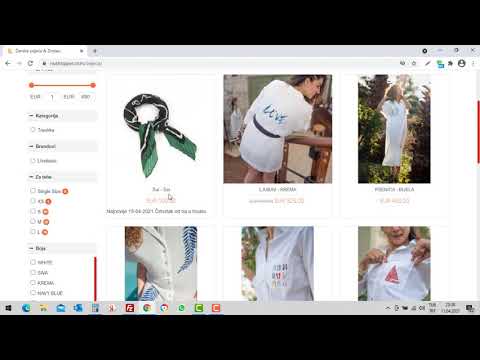 41:04
41:04
Marketplace cross-border features
- What is a foreign-language storefront?
- What is the marketplace cross-border model?
- Differences between a translated template and cross-border exports
- How should shipping be managed?
- Payment provider workflows
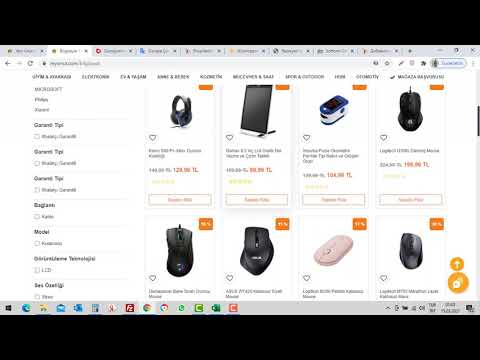
Storefront language and partial Google Translate
How the storefront is built in a foreign language while Google Translate is used only for product name, description, options, attributes, cart line labels, and checkout line items.
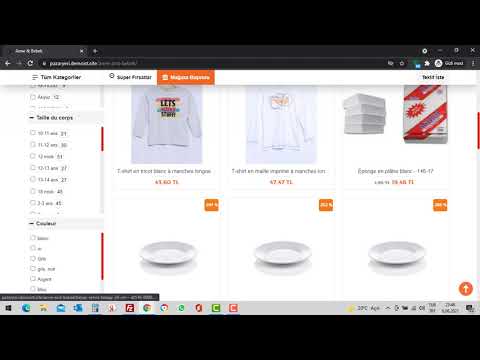
IP-based Google Translate
Detecting the visitor’s IP to open the site automatically in a supported language, translating the whole site or selected sections.

UPS and PTS shipping integrations
How Softomi cross-border marketplace software handles UPS and PTS: carrier selection, labels, bills of lading, and proforma invoices.
Contact Us Now for More Information
Let's Bring Your Marketplace Project to Life Together